
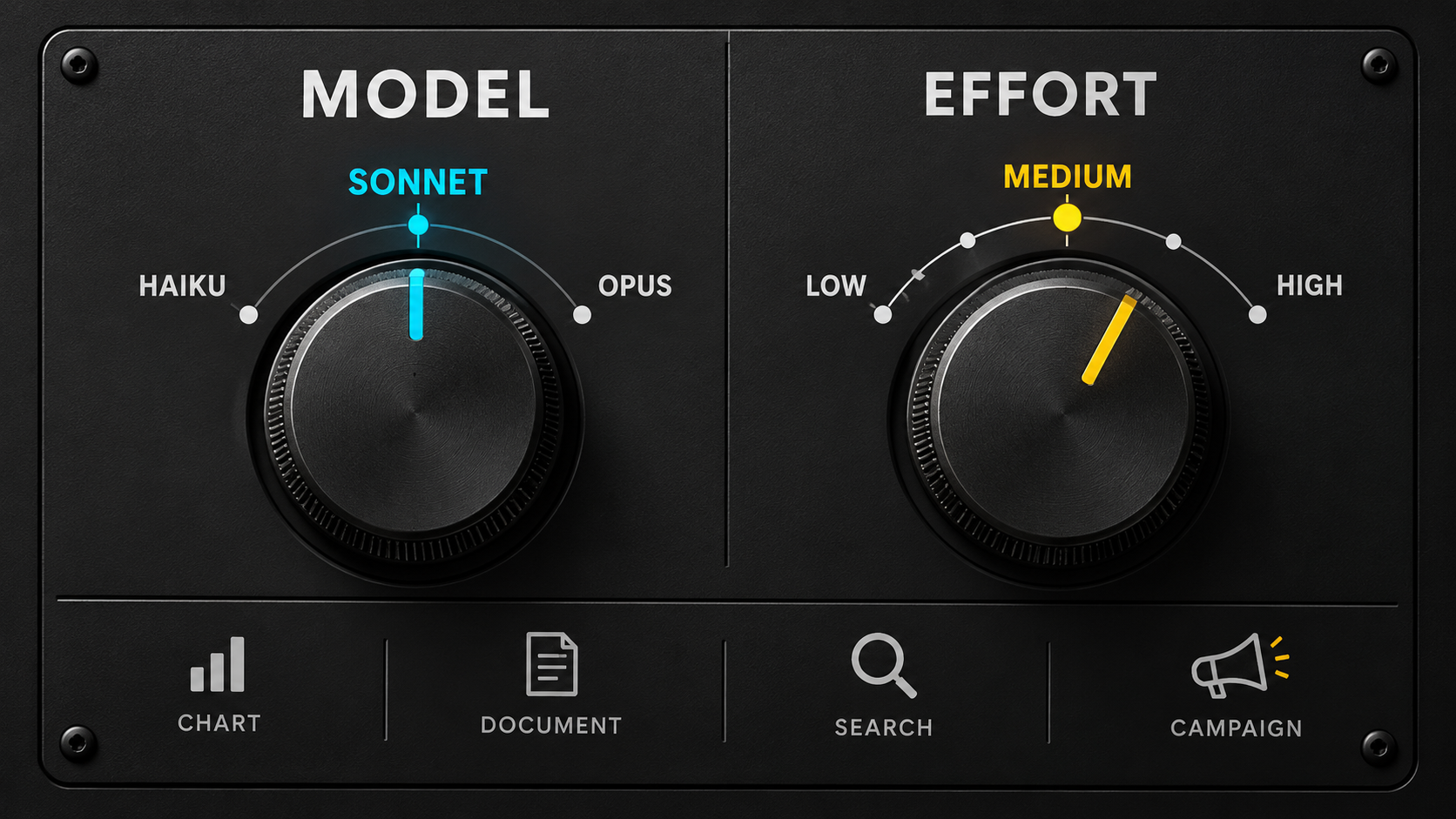
AI platforms now give us more control over which model handles our request and how much effort it puts into the answer. That’s useful—but the number of choices can quickly become confusing. Here’s a framework to help you decide how to choose the right ai model for your marketing projects.
What Models and Effort Do We Use On Our Marketing Projects?
If you’re looking for some guidance on AI effort and models for marketing, we’ve included a table below that shows some practical examples of how we use varying models and effort. A couple things to remember:
- The models and effort settings are changing literally every day. So, the snapshot below might be outdated as soon as we publish this.
- Even though the models change, we might stick with a similar setup if we find that the prompt, model and effort continues to reliably give us good results. Don’t change a good thing.
- Experimentation matters. Every business and marketing practitioner has their own needs. One person might look at the “Marketing Plan” task and expect to have every small detail outlined, another person may just be looking for a starting point as they build their own plan. The effort and model needed in both those cases might be very different.
| Prompt/Task | Model | Effort |
|---|---|---|
| Build this year’s full marketing and demand generation plan for our company | Claude Fable | High |
| I’ve attached raw data from last week’s ad campaigns. Please develop this week’s summary email to leadership using the data. | ChatGPT Sol 5.6 | Medium |
| We need to copy one web database over to our company Wiki. Open each set of code, test it, make any corrections and then let us know once you have copied the new code to our company Wiki | ChatGPT Astra (web browser version) | Medium |
| Add these products to the client’s Meta ads product catalog | Claude Sonnet 5.6 (web browser version) | Medium |
| How do I add guests to my free Slack channel? | ChatGPT Sol 6.1 | Light |
| I need to find the full Google reviews policy so I can pull excerpts out for a client | ChatGPT Instant | Light |
| Run an SEO audit for this site. We’ve included all relevant keywords, past reports and client positioning in the client project | Claude Sonnet 5 | High |
| Perform SEO keyword research for a new web page for this site. | Claude Opus 5 | Low |
| A client has two web sites and we need to sunset one of them. Prepare a full SEO audit and a plan to sunset one of the sites | Claude Opus 5.5 | Medium |
Now that you have a sense of some of the marketing tasks we run and their associated models, let’s take a closer look at what a model is, and how the effort affects results.
What’s an AI Model?
The model is the underlying AI system performing the work. ChatGPT, Claude and Gemini are the applications we interact with; each application gives us access to several different models.
Changing the model can affect:
- How well it handles complex instructions
- How quickly it responds
- How much it costs or counts against usage limits
- How effectively it works through long, ambiguous or multi-step assignments
The strongest model isn’t automatically the best model for every task. Summarizing meeting notes doesn’t require the same horsepower as analyzing five reports and producing a strategic recommendation.
Some Examples of Models and Their Hierarchy
The exact models available will depend on your plan and which version of the application you’re using. As of this writing, the general progression looks like this:
- ChatGPT: Luna → Sol → Astra
- Claude: Haiku → Sonnet → Opus → Fable
- Gemini: Flash-Lite → Flash → Pro
Models on the left generally prioritize speed and efficiency. Models on the right generally provide more capability for difficult or important work. These aren’t exact equivalents. Think of them as practical tiers—not direct head-to-head comparisons.
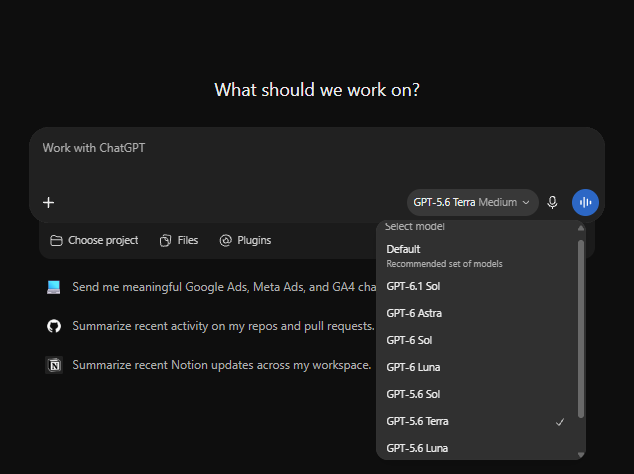
You can review the current hierarchies in the official documentation for ChatGPT, Claude and Gemini.
How Should We Decide on a Model?
Start with the lightest model and effort level that can reliably complete the job.
Use faster models with lower effort for summaries, extraction, formatting and simple revisions. Use balanced models with Medium effort for everyday drafting, analysis and planning. Move to stronger models or higher effort for conflicting information, complex strategy, important deliverables or difficult multi-step work.
If the answer feels rushed or misses connections, increase the effort. If the task itself appears beyond the model’s capabilities, switch to a stronger model.
Model names and controls change frequently. Use this framework as a guide—not a permanent rulebook.
What Is “Effort”?
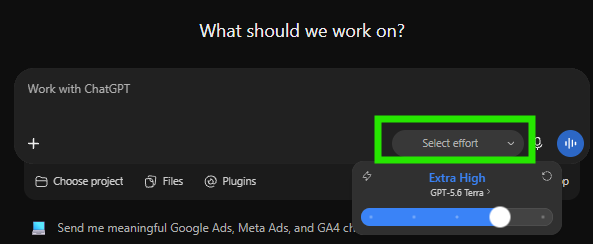
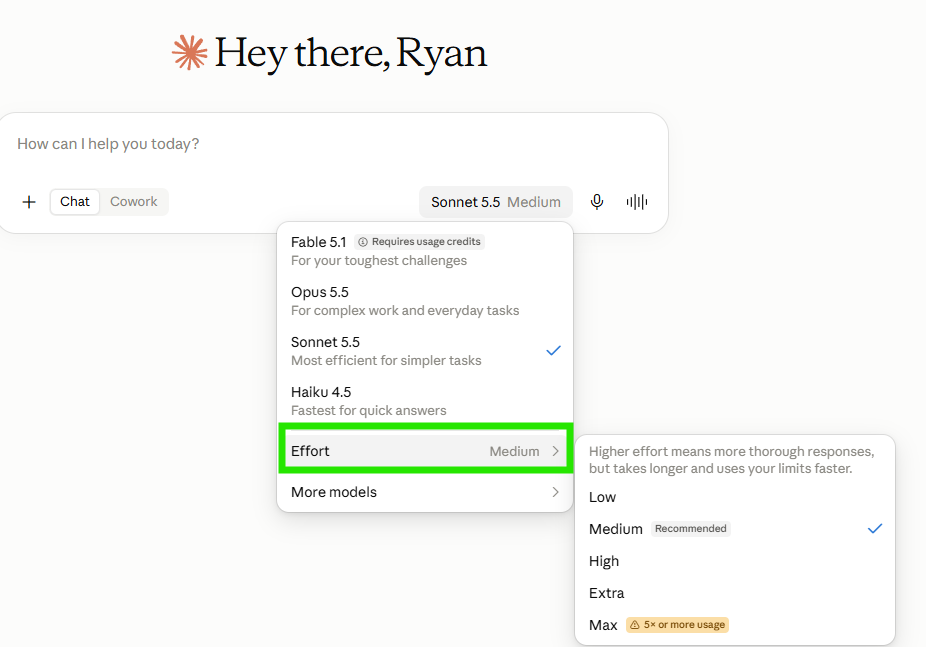
Effort controls how much work the selected model puts into one response.
Lower effort prioritizes speed and efficiency. Higher effort gives the model more room to analyze the request, work through multiple steps and consider different possibilities.
Higher effort can improve complex work, but it generally takes longer and uses more tokens or more of your available usage. It also won’t fix a vague prompt or give the model access to newer information. OpenAI explains its reasoning controls here. Anthropic provides a similar guide to Claude’s Effort and Thinking settings.
How Should You Choose the Effort Level?
Start by asking what failure would cost.
Use Low effort when the task is clearly defined and easy to review: summarizing meeting notes, extracting information, changing a format or rewriting approved copy.
Use Medium for everyday knowledge work: drafting content, analyzing campaign results, outlining a presentation or creating a project plan.
Use High when the model must reconcile conflicting information, analyze several sources, make strategic recommendations or create something that will be shared externally.
Use Extra High or Max when the task is long-running, highly technical or difficult to verify—and when the additional time and usage are justified.
Higher effort won’t give a model newer information, and it won’t fix a vague prompt. It simply gives the model more room to work through the request.
The Best Model Is the One That Reliably Does the Job
Businesses don’t need every employee using the strongest model at maximum effort. They need a repeatable way to match resources to the task.
Start with a practical default. Test important workflows using the same prompt across different models and effort levels. Compare accuracy, completeness, speed and cost. Then document the lightest combination that consistently meets your standard.
The goal isn’t to use the most powerful AI available. It’s to use the right amount of AI for the work in front of you.